
No More Red Lines
After twelve days of airstrikes, Iran’s response reveals more than its weapons ever could.

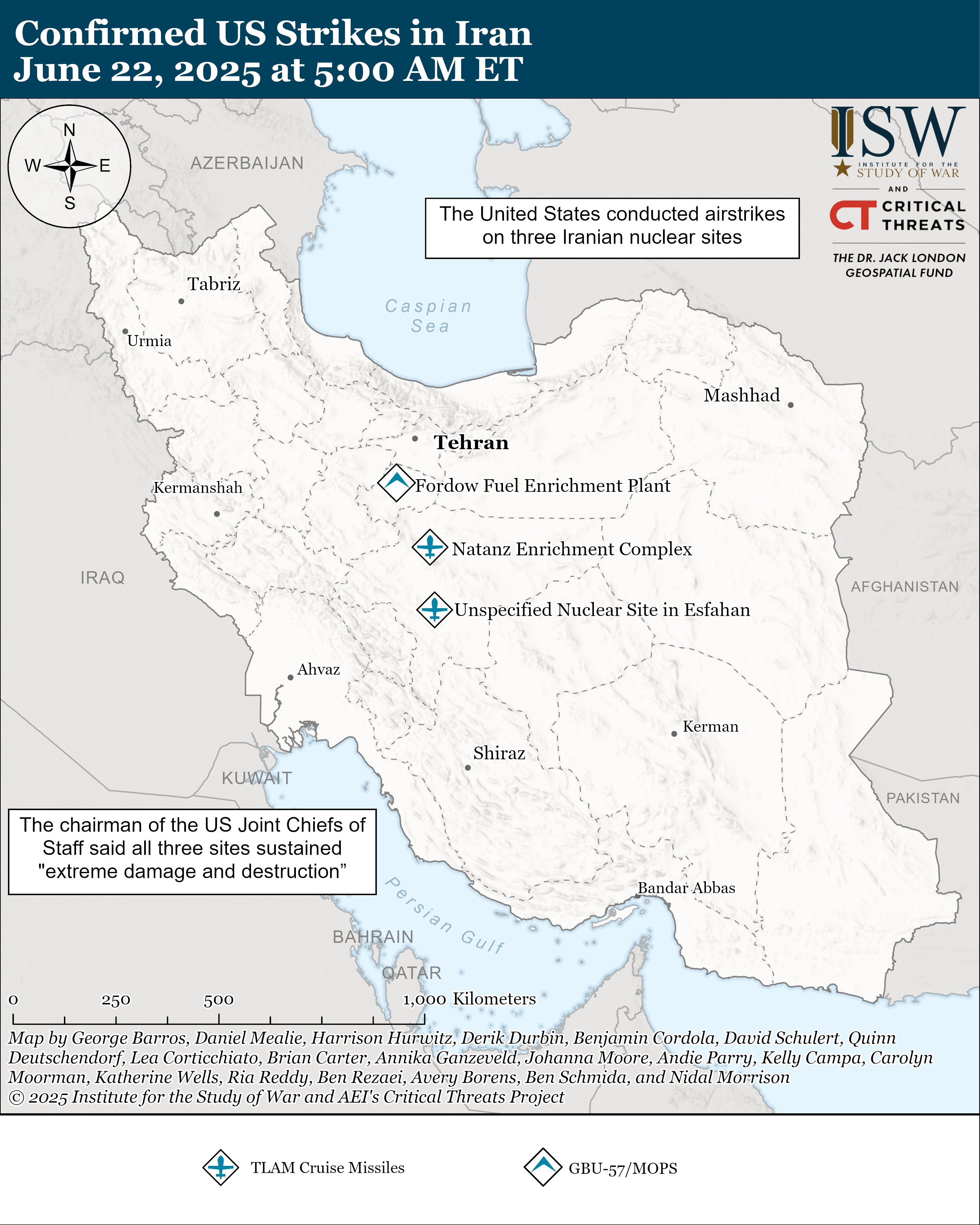
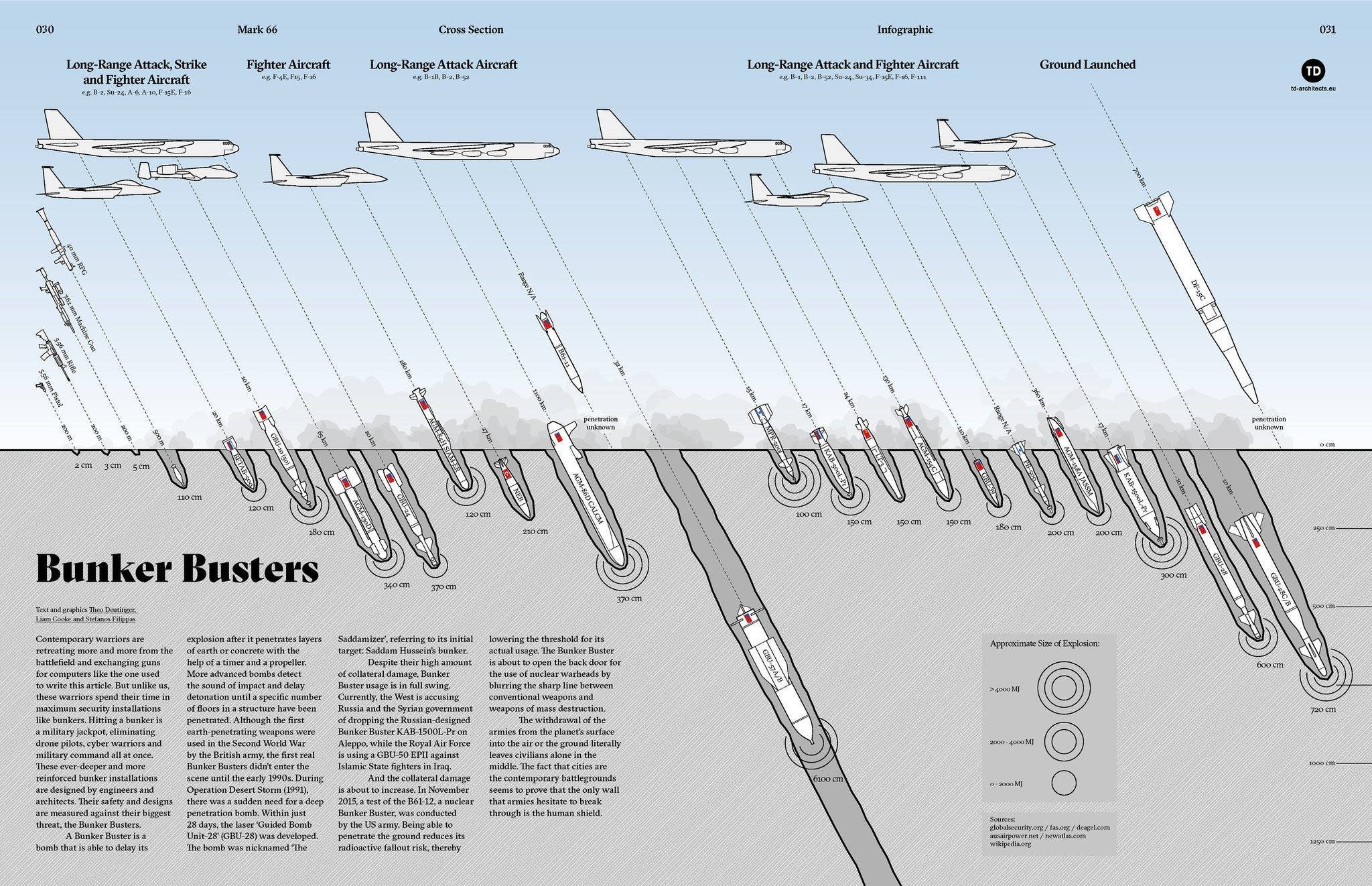
On June 22, 2025, the U.S. Air Force executed a flawless strike as part of Operation Midnight Hammer, deploying over a dozen Massive Ordnance Penetrators (MOPs) on the Fordow Fuel Enrichment Site. Simultaneously, dozens of Tomahawk Land Attack Missiles (TLAMs) targeted key facilities at the Natanz Enrichment Complex and a suspected enriched fuel storage site in Esfahan.
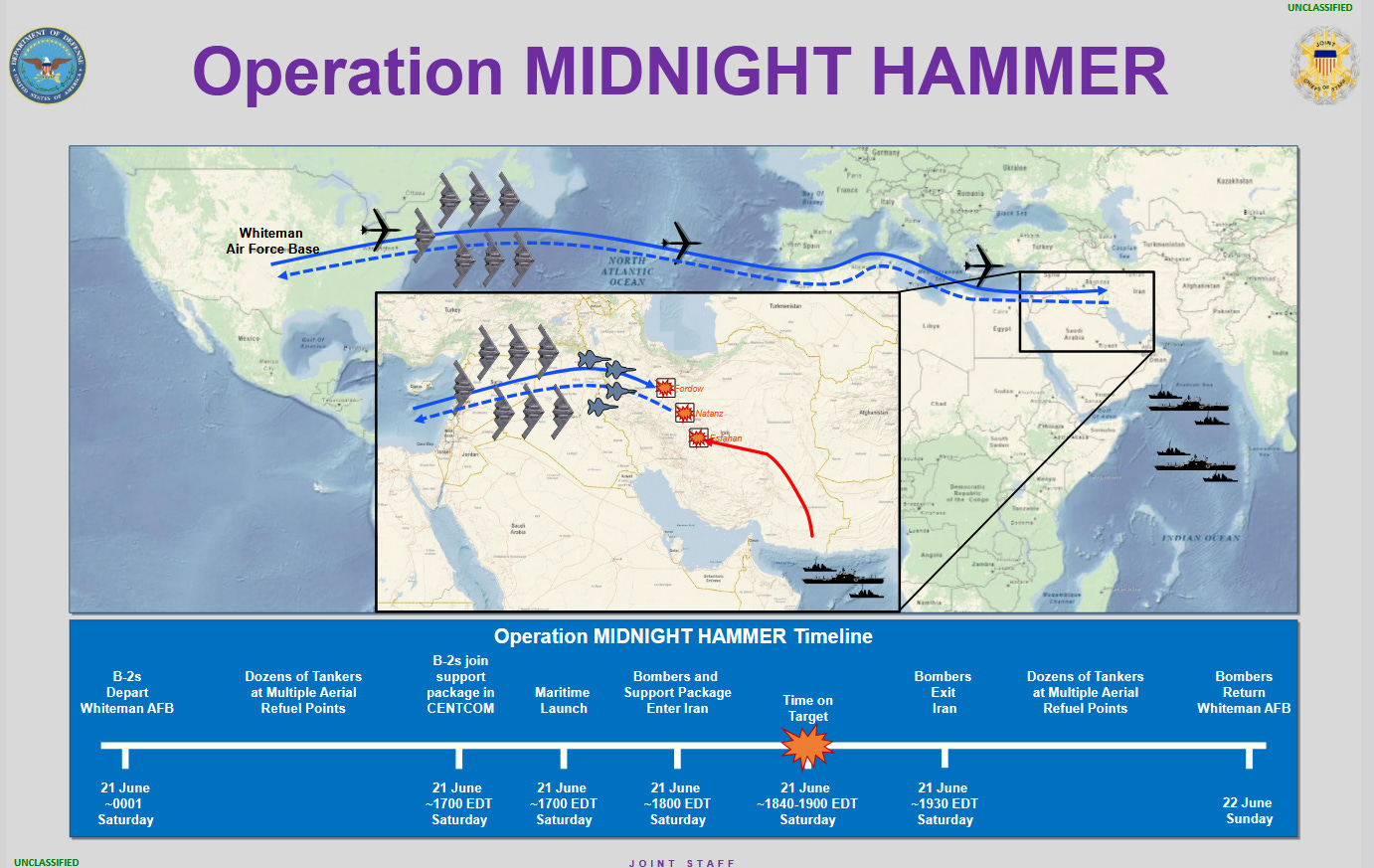
The Department of Defense has been notably transparent about the operation, which included a deliberate decoy movement of B-2 bombers to the Pacific. Meanwhile, the actual strike package moved eastward, supported by dozens of aerial refueling tankers and fighters. The mission was meticulously coordinated with a simultaneous TLAM barrage launched by the U.S. Navy, striking targets in unison.
While a full battle damage assessment (BDA) is ongoing, initial reports suggest the strikes were successful. Whether a follow-on strike will be required to achieve strategic objectives remains to be seen.
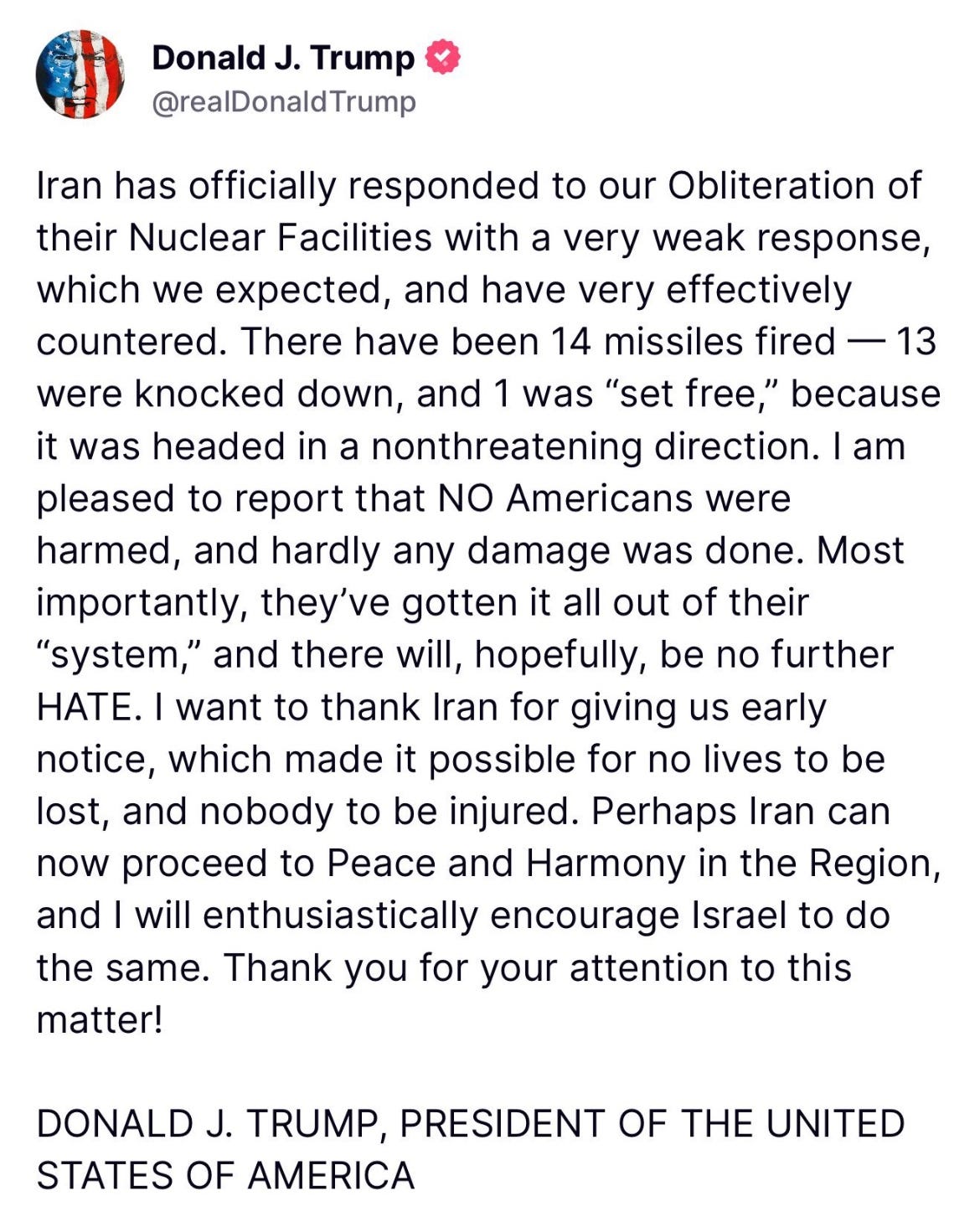
In response, Iran launched 14 ballistic missiles at Al Udeid Air Base in Qatar. According to multiple sources, Iran provided advanced warning to the U.S., and 13 of the missiles were intercepted.
One was allowed to pass based on its non-threatening trajectory. Iran's restrained response suggests a desire to de-escalate rather than escalate the conflict. Despite the attack, oil futures fell 7.5%, a sign of market confidence in the prospect of peace. President Trump responded with a post declaring, “CONGRADULATIONS WORLD, IT’S TIME FOR PEACE!” and the following post.
The Iranian regime now finds itself in a precarious position after 12 days of sustained Israeli airstrikes and the devastating U.S. operation. Russian President Vladimir Putin has urged Tehran to negotiate, while Chinese President Xi Jinping cautioned that “The Persian Gulf and surrounding waters are critical trade routes and must remain stable and open.” Meanwhile, Iranian proxy groups typically active in regional crises have remained conspicuously silent.

With minimal international backing, a crippled nuclear program, and Israeli air dominance over western Iran, the regime appears to be entering a phase of strategic retreat and self-preservation. Its decision not to strike multiple U.S. bases or attempt to overwhelm American air defenses reflects a calculated effort to avoid further escalation. Israeli officials have indicated that nearly all of their primary targets in Iran have been neutralized, and they expect to conclude operations by the end of the week. U.S. diplomatic efforts may soon follow.
Still, Tehran's long history of duplicity casts doubt on the durability of any negotiated agreement. Any deal would likely buy Iran time to regroup and rebuild. After the strike, Supreme Leader Khamenei posted: “Those who know the Iranian people and their history know that the Iranian nation isn’t a nation that surrenders.” His words should be taken at face value. Without genuine transformation, it’s likely that the world will face a similar crisis within the next decade. A popular uprising and eventual regime change remain the most viable path to enduring regional stability and achievable without direct U.S. military intervention.

Should the conflict de-escalate, Iran will be left in a profoundly weakened state. Dozens of senior military leaders have been killed, and critical infrastructure including airports, oil and gas depots, the ministries of justice, intelligence, foreign affairs, and media outlets, as well as political prisons have been severely damaged. To prevent a rapid regime recovery, the U.S. and its allies must sustain maximum pressure through all available non-military means. Every soft power tool should be leveraged to exploit the current vulnerability of the regime.
Regardless of how the situation develops, one message has been made clear: U.S. threats carry consequences. This administration has shown it will pursue peace through strength and the world is now paying attention.
The views expressed herein are those of the author and do not necessarily reflect the official policy or position of the Department of Defense or the U.S. Government.